05 June 2011
Demise of world`s biggest heritage
Amid the extinction of animals in the famous Serengeti National Park, conservationists and environmentalists are deeply worried that the newly proposed 480km tarmac road could totally ruin the ecosystem of the global biggest heritage.
The spirited campaign by the government to defend the envisaged Musoma-Loliondo tarmac road as vital to country’s economy has been weakened further, in the wake of publication of the project’s negative impacts on the ecological and ecosystem status of the Serengeti National Park in an internationally respected journal.
That development has simultaneously aggravated the worries and bitterness of wildlife conservationists and environmental experts within and beyond the country.
According to research findings published by the Journal of Zoology recently, there was a drastic decline in number and total disappearance of particular species of animals in Kenya’s Massai Mara Game Reserve.
Maasai Mara Game Reserve neighbours Serengeti National Park in the south-western part and is always a home for migrating wildebeests and zebras around August annually.
The findings come amid a warning by the United States to Tanzania's government about the impact of its plan to build a road through the Serengeti that environmentalists say could affect the famed wildebeest migration and threaten endangered species.
The top US diplomat for Africa, Johnnie Carson, said on Wednesday that he raised the matter in meetings with top Tanzanian officials in late April and that Secretary of State Hillary Rodham Clinton told reporters that Tanzanian officials are "clearly aware" of concerns about the road and are trying to address them.
The research conducted by Dr Joseph Ogutu, a senior statistician in the Bioinformatics unit of the University of Hohenheim, Germany and part of the findings reported by BBC’s nature section, gathers that numbers of impala, warthog, giraffe, topi and Coke’s hartebeest have declined by over 70 per cent.
It further shows that even fewer survive beyond the reserve in the wider Mara, where buffalo and wild dogs have all but disappeared, while huge numbers of wildebeest no longer pass through the region on their epic migration.
However, the research says numbers of cattle grazing in the reserve have increased by more than 1100 per cent, although it is illegal for them to so do, one of the major attributes for wildlife disappearance.
There appear to be three main causes of these dramatic declines: the activities of poachers, changing land use patterns in ranches within the Mara, and an increase in the number and range of livestock held on these ranches. . . .
The main cause of concern for the Tanzania conservationists and environmentalists is that the eco-system and ecology of Maasai Mara to high degree was similar to that of Serengeti National Park, thus worrying species on Serengeti to suffer the same consequences from activities during tarmac road construction and afterwards.
The government’s proposed high way from Musoma, the Mara regional headquarters is intended to enable Serengeti and Loliondo districts residents in Mara and Arusha regions respectively, mainly cattle grazers to access markets in lake (Victoria) zone towns as well as Arusha.
According to the government’s plan, the tarmac road would pass through Grumet, Mugumu, Northern section of Serengeti National Park, Loliondo, Sonjo, Engaruka and connect the existing tarmac road at Mto wa Mbu area. It has a linear length of 480 kilometers.
However, the main disputed distance is 53 Kilometers, which would cross-cut the National Park, at the area which is main way for the epic immigration of wildebeest and zebras to Maasai Mara.
The CSO Regional Programme Manager with the World wildlife Fund (WWF), Richard Rugemalira, told The Guardian on Sunday that the report on what faced Maasai Mara Game Reserve really raised the eyebrows for Tanzania conservationists, justifying the fund’s relentless efforts to oppose the construction of the highway.
Dr. George Jambiya, a lecturer in the University of Dar es Salaam’s Department of Geography and Environmental Studies, said the fears were increased by the fact the government authorities did not disclose how wide the proposed road would be.
“ The same government officials give contradicting statements on the matter, sometimes they say the road would be narrow to save the surrounding community and then are quoted as saying it would be highway; we thus fail to conclude which statement to take and which one to disregard,” he remarked.
The don maintained that since it was not clear as to how big the road would be, the same applied to the eventual number of human population within the park.
“We were surprised; we are told an Environmental Impact Assessment (EIA) was conducted but that was done after the decision to construct the road was already made. It seems the EIA was a mere formality and not a prerequisite as no public hearing was conducted as required,” said the lecturer. The Conservationists have proposed for the alternative road of Lamadi – Bariadi – Maswa – Meatu – Karatu which would shift the transport operations from North to South of Serengeti National Park.
When contacted, the Permanent Secretary in the Ministry of Natural Resources and Tourism, Maimuna Tarishi, could neither confirm nor deny whether the proposed project could go ahead as per original plan or there was any consideration to the position of the environmental experts.
“The ministry responsible for this matter is that of Works and not this one (Natural resources and Tourism) so please forward your questions to the appropriate ministry,” said the PS repeatedly even after she was told that her ministry was contacted because the proposed road were to pass through the Serengeti National Park.
The disputed Musoma- Mugumu - Loliondo Mto wambu tarmac road was first mentioned in earnest by President Jakaya Kikwete during his 2005 presidential campaign in Mugumu. The National Wildlife Conservation Act of 2009 allows some activities to be carried out inside the parks but those activities should in no way interfere with the General Management Plan of the particular Park, which among other things covers curving areas (where animals give births), immigration ways.
The government has never hinted on the prospective financier of the project as available information suggests that most development partners who contribute to development projects were against the proposed road, and threatened to withdraw their financial assistance for 2011/2012 if the project went ahead.
Serengeti National Park is the world’s biggest park. According to the Tanzania Tourism Board’s 2009 statistics, the tourism industry ranked second in terms of contribution to the national Gross Domestic Product for a single sector, headed by mining, with about 50 pre cent tourism income being generated from Serengeti.
07 January 2011
28 December 2010
The Case of the Missing Carbon
Alone in a sealed jar, a mouse would die from exhaled CO2. But as scientist Joseph Priestley observed in 1771, adding a mint plant allows the mouse to thrive. In this proof of photosynthesis, the mint absorbed CO2, retained carbon for growth, and released oxygen. Two centuries later humans tried—and failed—to survive in a sealed environment in Arizona's Biosphere 2.The machinery monitors the vital functions of a small section of Harvard Forest in the center of the state. Bright red numbers dance on a gauge, flickering up and down several times a second. The reading reveals the carbon dioxide concentration just above the treetops near the shed, where instruments on a hundred-foot (30-meter) tower of steel lattice sniff the air. The numbers are running surprisingly low for the beginning of the 21st century: around 360 parts per million, ten less than the global average. That's the trees' doing. Basking in the sunshine, they inhale carbon dioxide and turn it into leaves and wood.
In nourishing itself, this patch of pine, oak, and maple is also undoing a tiny bit of a great global change driven by humanity. Start the car, turn on a light, adjust the thermostat, or do just about anything, and you add carbon dioxide to the atmosphere. If you're an average resident of the United States, your contribution adds up to more than 5.5 tons (5 metric tons) of carbon a year.
The coal, oil, and natural gas that drive the industrial world's economy all contain carbon inhaled by plants hundreds of millions of years ago—carbon that now is returning to the atmosphere through smokestacks and exhaust pipes, joining emissions from forest burned to clear land in poorer countries. Carbon dioxide is foremost in an array of gases from human activity that increase the atmosphere's ability to trap heat. (Methane from cattle, rice fields, and landfills, and the chlorofluorocarbons in some refrigerators and air conditioners are others.) Few scientists doubt that this greenhouse warming of the atmosphere is already taking hold. Melting glaciers, earlier springs, and a steady rise in global average temperature are just some of its harbingers.
By rights it should be worse. Each year humanity dumps roughly 8.8 billion tons (8 metric tons) of carbon into the atmosphere, 6.5 billion tons (5.9 metric tons) from fossil fuels and 1.5 billion (1.4 metric) from deforestation. But less than half that total, 3.2 billion tons (2.9 metric tons), remains in the atmosphere to warm the planet. Where is the missing carbon? "It's a really major mystery, if you think about it," says Wofsy, an atmospheric scientist at Harvard University. His research site in the Harvard Forest is apparently not the only place where nature is breathing deep and helping save us from ourselves. Forests, grasslands, and the waters of the oceans must be acting as carbon sinks. They steal back roughly half of the carbon dioxide we emit, slowing its buildup in the atmosphere and delaying the effects on climate.
Who can complain? No one, for now. But the problem is that scientists can't be sure that this blessing will last, or whether, as the globe continues to warm, it might even change to a curse if forests and other ecosystems change from carbon sinks to sources, releasing more carbon into the atmosphere than they absorb. The doubts have sent researchers into forests and rangelands, out to the tundra and to sea, to track down and understand the missing carbon.
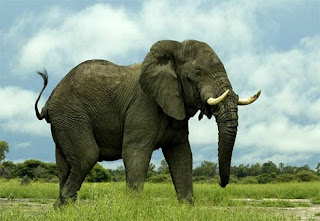
African Elephants Really Two Wildly Different Species?

"The big surprise of this paper," though, is just how genetically different the African savanna elephant and the African forest elephant are, co-author David Reich said.
According to the new research, the two major types of African elephants are about as genetically distinct from each other as the Asian elephant is from the extinct woolly mammoth.
And that difference has deep roots in the elephant family tree, the DNA evidence suggests.
The two apparent African elephant species appear to have evolved from a common ancestor between two and a half million and five million years ago—nearly as long ago as the human and chimpanzee lineages diverged, according to some genetic studies.
For Species Designation, Size Doesn't Matter
Traditionally, the forest and savanna elephants have been classified as subspecies of the same species. But numerous distinctions have been noted. For example, forest elephants live in family groups of just a few animals, whereas savanna elephant family groups number about ten and often congregate in groups of 70 or so.
And—perhaps unsurprisingly, given its wide-open habitat—the African savanna elephant (Loxodonta africana) has evolved to be about twice as big as the forest elephant (Loxodonta cyclotis).
The savanna elephant tips the scales at up to seven tons and stands a full meter (3.3 feet) taller at the shoulder than the African forest elephant, which lives in equatorial forests of central and western Africa.
But even plainly visible morphological, or physical, differences don't necessarily indicate that animals are of separate species.
"Animals have an amazing capacity to change in morphology over short periods of time," said Reich, a population geneticist at Harvard Medical School.
Without pressures from predators and competitors, for example, species isolated on islands can shrink in just tens of thousands of years—a blink of the eye in evolutionary time.
Elephants have experienced such transitions before, producing animals like the "pygmy" Asian elephant of Borneo, which isn't considered a separate species, despite its relatively short, round shape.
Interspecies Elephant Sex?
Debate over the species status of African elephants has been simmering for at least a decade.
A 2001 study in the journal Science included the first DNA evidence that the savanna and forest elephants are separate species.
But then other studies showed that at least a small number of savanna elephants shared mitochondrial DNA—genetic information passed down from only mothers—with forest elephants.
This "proved there was some interbreeding within at least the past 500,000 years," Reich explained.
But that limited interbreeding isn't evidence that the two elephant types are from the same species, he said. It's just an example of interspecies hybridization, relatively common in the animal world, ha added.
Mammoth DNA Called Into Play
The key to the new discovery was some "cold case" genetics work on ancient, extinct elephant relatives: the woolly mammoth and the mastodon. The mastodon's nuclear genome, in particular, was sequenced for the first time for the study.
The genomes of five distinct animals—the Asian elephant, African savanna elephant, African forest elephant, woolly mammoth, and American mastodon—were then compared and contrasted.
The results showed that "in fact these [African elephant] populations diverged long ago and are at least as different as Asian elephants and mammoths—and those two are not only different species but entirely different genera," Reich said.
The apparent new species discovery is more than just cocktail party fodder for geneticists—it may have important conservation and management implications.
If Africa's elephants are from two distinct species, then each has a smaller population than previously believed. In this case, forest elephants may be of particular concern, because far less is known about their population status. Their numbers may prove small enough to garner additional protections.
27 December 2010
Serengeti Road on, stresses Magufuli

The government has stressed that plans for construction of the proposed 480-km Arusha-Musoma highway through the Serengeti National Park are still on despite mounting pressures from local and international activists.
Speaking here exclusively after inspecting the construction of the Arusha-Namanga highway, minister for Works, Dr John Magufuli explained: “There is no way we can stop constructing this important road.”
Construction of the Serengeti highway is set to begin in 2012. The corridor will run from Mto-wa-Mbu, to Engaruka on to Lake Natron shores, Loliondo, Serengeti and finally Musoma.
He said the road was important both socially and economically as it linked people in the northern tourists’ circuits with other Tanzanians as well as boosting the tourist industry in the country.
Dr Magufuli noted that for years, thousands of people in Loliondo and Serengeti areas were denied proper road networks.
He wondered why the pressure was coming from environmental activists in neighbouring countries like Kenya.
“I wonder as why these pressures come from Kenya? This road will benefit our people and the development of our country, so we need to be firm on this,” he said, adding: “I have visited different national parks like those in South Africa and Botwana, and there are tarmac roads, yet the wild animals are still there.”
According to the outspoken minister, the Tanzania National Parks Authority (Tanapa) had carried out its own survey and found that the road will have no negative impacts on the Serengeti national park.
“So, I don’t know where these noises are coming from,” he said, stressing that the road will ease movement of goods and people in the northern regions and the neighbouring countries.
He however, agreed with the proposal by Tanzania’s non-governmental organizations engaged in environmental issues not to tarmac a section between Kleins gate and Tabora B area of the Serengeti National Park.
A network of 56 environmental organisations recently argued that the 53-km section of the proposed road is an important corridor for seasonal migration of wildebeest.
The network’s representatives made the call recently after working on people’s views on the controversial project, which has drawn the attention of activists from around the world.
An official from Serengeti Environmental Protection and Development Association (SEPDA) Joseph Masina said the majority of people backed the project due to its socio-economic importance.
Deo Mfugale, chairman of the Journalists Environmental Association of Tanzania (JET) said the Serengeti National Park needs to maintain its status, as the World Heritage Site by keeping its environment natural.
About a month ago hundreds of people living along the proposed Arusha-Musoma highway rallied behind the plan, citing economic importance to the local communities and the entire nation.
For almost six months, green activists have been rallying against the proposed road, citing potential disruption to the world’s greatest migration route of wildebeest which was likely to collapse.
The government of Tanzania has maintained its determination to construct the road, estimated to cost USD480million, saying it had taken the necessary precaution not to disrupt the environment.
During his election campaign trail, President Jakaya Kikwete maintained that the planned road would not disturb the ecosystem of Ngorongoro Conservation Area.
He said the project had taken into consideration all necessary precautions regarding environmental conservation.
“The road will not pass through the conservation area in the first place and all precautions have been taken to make sure that the wildlife is not affected,” the president explained.
12 December 2010
Saa Nane to become national park

Timber harvest permits under stricter scrutiny

07 December 2010
what is carbon market
Emissions trading (also known as cap and trade) is a market-based approach used to control pollution by providing economic incentives for achieving reductions in the emissions of pollutants.
A central authority (usually a governmental body) sets a limit or cap on the amount of a pollutant that can be emitted. The limit or cap is allocated or sold to firms in the form of emissions permits which represent the right to emit or discharge a specific volume of the specified pollutant. Firms are required to hold a number of permits (or carbon credits) equivalent to their emissions. The total number of permits cannot exceed the cap, limiting total emissions to that level. Firms that need to increase their emission permits must buy permits from those who require fewer permits The transfer of permits is referred to as a trade. In effect, the buyer is paying a charge for polluting, while the seller is being rewarded for having reduced emissions. Thus, in theory, those who can reduce emissions most cheaply will do so, achieving the pollution reduction at the lowest cost to societyUnder the Kyoto Protocol, there are two main trading devices. The first, the Clean Development Mechanism (CDM), allows Kyoto countries to offset their emissions by investing in clean technologies in developing countries or purchasing the resultant Certificates of Emission Reduction (CERs) from such projects. The second, called Joint Implementation (JI), allows industrialized countries to do essentially the same thing, only in other industrialized countries.
Irrigation farming necessary for Kilimo Kwanza initiative`

The ‘Kilimo Kwanza’ initiative will not help pull millions of farmers eradicate poverty if there is no concerted effort to put in place irrigation farming infrastructure, according to farmers, who attendeds one-day training programme on ‘Kilimo Kwanza’ in Arusha at the weekend. They said continued reliance on rain-fed agriculture was unrealistic.
Naiman Kitomari from Kalangai Village said if relying on unpredictable rains continued, poverty eradication efforts would hardly succeed.
He explained that there was a need to construct irrigation infrastructure in all productive areas to boost agriculture. Citing his own example, Kitomari said he once borrowed money from the village’s Savings and Credit Cooperative Societies (Saccos) but he was unsuccessful because he relied on unreliable rains.
Maliaki Mbesere from Mkonoo Village said rain-fed agriculture had failed to help many farmers eradicate poverty and improve their livelihoods.
He noted that climate change had aggravated the situation because rainfall trends in most cases had been unpredictable.
An Arumeru District resident, William Nulu, said: “I was forced to sell my cow to get money to settle my loan from the Saccos. This is because I failed to get enough crops to meet the costs I incurred in production.”
He explained that during the farming season, the rain was not enough and so he harvested very little.
“It is a waste of time and resources for farmers to continue relying on rain-fed agriculture,” said Nulu.
Echoing Nulu’s statement, Thomas John Laizer, from Monduli District said: “This kind of farming is no longer useful and irrigation farming should be applied, instead.”
Laizer also cited lack of proper marketing as a key challenge to the implementation of ‘Kilimo Kwanza’ in Tanzania.
“There are areas where farmers have managed to produce enough crops but marketing remains a challenge as they don’t know where to sell their produce. At the end of the day, they sell their produce at a throw-away price, making them remain in the vicious cycle of poverty,” he said.
Training facilitator from the Ministry of Agriculture, Food Security and Cooperatives, Abdallah Msambachi, said irrigation farming and the application of high yielding inputs were key issues to ensure optimal crop production in the country.
He called on farmers to engage in irrigation farming, which had proved to be successful in other parts of the world.
Citing the 1997 agriculture and livestock policy, the official said it was clear that the policy advocated irrigation farming as an ideal solution to unpredictable rainfall.
Msambachi further said there was a need for the private sector to engage in the agricultural sector, which he said was the backbone of the country’s economy as it employed over 80 per cent of Tanzanians.
The training programme, which was organised by Arusha-based civil society organisation Hakikazi Catalyst, meant to equip small-scale farmers with modern farming skills to implement ‘Kilimo Kwanza’. Participants came from Tanga, Kilimanjaro, Arusha and Manyara regions.
25 November 2010
Serengeti hunters still missing, says Mara RPC
14 October 2010
Biofuels should not be at the cost of food security

In 2007, a science journal, Scientific American, called jatropha "green gold in a shrub," and that it was a plant that "seems to offer all the benefits of biofuels without the pitfalls."
This was because the wonder tree seemed a boon for the very places with some of the highest rates of poverty and plenty of hot, dry lands: the global south, including Latin America, Africa and Asia.
It was then publicised that, among other things, the miracle tree could also stabilize and restore degraded soils.
This was followed by the frenzy of large scale jatropha farming in several countries, including China, India, Myanmar, Malaysia, Malawi, and Brazil.
The major motivating factor was the myth that jatropha could thrive in the dry and degraded lands that are not suitable for food crop farming.
However, it has now been proved through scientific research that contrary to earlier expectations, the tree grows far more productively on higher quality land with more rainfall or irrigation.
In fact, experts say that when jatropha is grown in marginal conditions, farmers have inevitably ended up with marginal yields.
But if the tree is grown on fertile land, this could lead to large scale jatropha farming taking up a huge chunk of productive land thereby posing a threat to food security.
This has already happened in other countries, including India, where government foresters drained rice paddies in order to plant jatropha in the poor and mostly tribal state of Chhattisgarh.
On Mindanao, the second-largest province of the Philippine islands, protests erupted in late 2008, with indigenous leaders insisting that jatropha plantations had begun to displace needed crops of rice, corn, bananas, and root vegetables.
It is for this reason we wish to commend the government for taking a cautious approach to the development of Tanzania’s biofuel industry.
According to a research conducted in the country by two scholars from the London-based International Institute for Environment and Development (IIED), at least 4 million hectares of land have so far, been requested for biofuel production in the country – especially for jatropha, sugar cane and palm oil.
We are happy that the government has taken heed of the alarm raised over wholesale lease of land for the biofuel industry in that out of the requested area, only 640,000 ha have so far been allocated, with only 100,000 ha having been granted formal rights of occupancy.
Here we are talking about investors who are proposing biofuel projects involving initial investments of up to $1bn over the next 10 to 20 years, taking up mostly village land that is not permanently settled but is used for various economic activities in coastal areas like Bagamoyo, Rufiji, Kilwa and Kisarawe districts.
We therefore, fully support the government decision to review the legal, regulatory and institutional frameworks to identify existing gaps so that it can formulate a new policy and legislation that will govern sustainable development of liquid biofuel industry in the country.
We understand that the country is currently scouting for consultants to undertake this daunting but important task. It should be done carefully because much as we need alternative energy, this cannot be at the risk of food security.
07 October 2010
Tanzania’s fertility rate drops, says report
However, the TFR in the rural mainland has remained higher for about 6.1 births per woman compared to 3.7 births per woman in the urban area. Also the fertility in the mainland peaks at the age of between 20 and 25 while in the isles, it starts at the age between 25 and 29.
But in all these ages, the age specific fertility rates are substantially higher for the rural than for urban women. The greatest difference in age specific fertility rates between urban and rural women in mainland occurs at the age between 20 and 24, that is 106 births per 1,000 women.
According to NBS Director General, Dr Albina Chuwa, there has been a down trend in fertility since the early 1990s but with great fluctuations. She made the remarks at the launch of the TDHS preliminary report in Dar es Salaam on Monday.
Dr Chuwa said a change in fertility rate from 6.3 births per woman to 5.4 births per woman in a period of 20 years meaning that there is a decrease of one child, is a major decision reached by couples.
“Reproductive, child and maternal health are good indicators to the country’s social and economic development and have serious and direct implications on the social sustainability of services in the country,” Dr Chuwa remarked.
A demographer with the NBS Mr Ireneus Ruyobia said a decrease in TFR was a step and a positive sign towards achieving country’s development plans.
“With government efforts especially on family planning and investment in education much insistence being on young girls, will definitely help in lowering the TFR, thus achieving the development plans,” Mr Ruyobia said.
The Permanent Secretary for the Ministry of Health and Social Welfare, Ms Blandina Nyoni noted the government was committed to family planning programmes. She said it was encouraging that three tenths of all women or 29 per cent in the country are currently using some methods of contraceptives, where 24 per cent use modern methods and 5 per cent use traditional methods.
According to the TDHS report, the most commonly used modern methods among all women are injectables by 9 per cent, pills by 5 per cent and male condoms by 4 per cent.
Also among married women, about one third or 34 per cent use some methods of contraception, 27 per cent use modern methods and 7 per cent use traditional methods.
The PS observed further that report findings showing decrease of under five mortality rate by 40 per cent from 137 deaths in every 1,000 births, infant mortality from 81 deaths to 51 in every 1,000 births are very encouraging.
Some of the objectives of the TDHS 2010 are to collect high quality data on fertility levels and preferences, family planning use, reproductive, child and maternal health, nutritional status of young children and women and childhood mortality levels.
12 September 2010
Joint project to control Lake Tanganyika drainage

TANZANIA and the Democratic Republic of Congo (DRC) have agreed to undertake major rehabilitation of a gate on Lake Tanganyika to control the level of water which has been declining, thus, threatening the lives of millions of peoples of the two neighbouring countries.
Rehabilitation of the gate which was constructed before the two countries gained their independence was recommended by President Jakaya Kikwete, who expressed concern over the depletion of water in the lake that separates the countries. His recommendation was supported by DRC counterpart Joseph Kabila.
President Kabila’s decision to support strengthening of the gate was communicated to President Kikwete in Dar es Salaam on Friday by the DRC leader’s Chief Advisor, Mr Katumba Mwanke who paid courtesy call on him at the State House. Mr Mwanke told President Kikwete that the DRC leader fully agreed with his proposal to control the water level on Lake Tanganyika which is said to be fast declining.
President Kikwete met and held talks with President Kabila’s special advisor at the State House. Mr Kikwete returned from Tanga region where he was on re-election campaign trail for Idd el Fitr celebrations. On his tour of Kigoma region, President Kikwete was told of the declining water level on Lake Tanganyika following the breakdown of the gate which controls water from the Lake.
In July, this year, President Kikwete sent the Minister for Water and Irrigation, Prof Mark Mwandosya, to deliver his proposal to his DRC counterpart on the need to rescue water from the Lake. Earlier, it was suspected that the water level on Lake Tanganyika was declining due to siltation, but was later realized that the special gate built during colonial times had broken down.
The gate controls water flowing to Luguka River which empties its waters to River Congo and ensures the water level remains constant to facilitate other activities on the Lake including; transportation, fisheries and other uses by residents surrounding the Lake. Following the breakdown of the gate, water level on Lake Tanganyika reached 2.5 metres - the lowest level in 12 years since scientists started to monitor the declining level on Lake Tanganyika in 1998.
The rate of water decline on the Lake poses serious threats to people surrounding and depending on Lake Tanganyika for their livelihood as well as the economies of countries bordering the Lake. Tanzania and DRC have strengthened cooperation in protection of Lake Tanganyika’s ecosystem.
“This is an important co-operation among our two countries and it is for this reason that President Kabila has acted promptly to respond to your proposal,” Mr Manke who is also a Member of Parliament in President Kabila’s government, told President Kikwete during talks also attended by DRC Ambassador to Tanzania Mr Juma Khalfan Mpango.
Mr Kikwete, on the other hand, thanked President Kabila for his prompt response to his recommendation on co-operation of the two countries to rehabilitate the gate, stressing that Lake Tanganyika was important for the lives and economies of the millions of people of the two countries and others surrounding the Lake.
He also told the DRC leaders’ special advisor that Tanzania has already contacted the World Bank to see how it can help in rehabilitating the gate. Mr Mwanke wished Tanzania peaceful elections scheduled for October 31, this year.
07 August 2010
Tourist firm opposed to public road through Serengeti

Singita Grumeti Reserves said yesterday that it is opposed to a public road through the Serengeti National Park, unless it is under the jurisdiction of the Tanzania National Park’s (TANAPA) and used solely for tourism purposes.
This comes barely a few days after President Jakaya Kikwete assured the public, and especially people from outside the country and environmental activists, that he himself was an activist with regard to environmental preservation and a lover of the Serengeti National Park.
The President said in his monthly address that the decision by the government to construct a road through Ngorongoro and Serengeti game parks would upset many people, especially environmental activists and wildlife lovers.
In a statement made available to this paper yesterday, Singita Grumeti Reserves said the preservation of the Serengeti National Park and the protection of the wildebeest migration route in northern Serengeti was critical, adding that Singita Grumeti Reserves has been an integral part of the conservation effort.
“Recently there have been reports that there are plans to construct a major highway running through the northern section of Serengeti National Park in Tanzania, which is home to the world-famous wildebeest and zebra migration, and Grumeti Reserves is one among those mentioned as sponsors of the road construction,” it said.
It said Singita’s mission was to support low impact, sustainable ecotourism in the Serengeti as the best way to improve the economic opportunities of Serengeti district residents. Singita has been the largest supporter of conservation and community development in the Serengeti since 2003 and is deeply committed to the people and wildlife of Tanzania.
Most recently, in May 2010, it partnered with the Tanzanian government to reintroduce the first black rhino in the Serengeti in over forty years, at a project cost of over USD5 million.
President Jakaya Kikwete recently clarified the confusion regarding government plans to construct a tarmac road from Arusha to Mara which would pass through the Sengereti National Park.
According to the statement issued yesterday, the President said construction of the tarmac road would start from Musoma to Mto wa Mbu via Magumu in Sengereti district, onward to Liliondo in Ngorongoro district.
Promote sustainable charcoal production
It remains the basic means of cooking and earning a living despite the inherent threat to forest resources and environmental degradation.
Available statistics show that Africa is the most affected by the menace. The continent is said to be losing its forest cover twice as fast as the rest of the world, according to a recent United Nations report.
The report says four million hectares of forests in Africa are felled each year, with the result that while the continent originally boasted seven million square kilometres of forests, a third of that has now been lost, mostly to charcoal trade.
Tanzania too is among countries that are reported to be endangered. Recent studies reveal shocking findings that the country’s overall forest cover could disappear in about ten to 16 decades if the current deforestation trend is not curbed.
The studies, undertaken separately by the Conservation International – a US non-profit organisation and the UN Food and Agriculture Organisation (FAO), show respectively that 2,300 and 4,200 square kilometres of forests in Tanzania are being destroyed annually.
It is for this reason that we praise the move by Barclays Bank Tanzania Limited to inject 1.5bn/- in the Dar es Salaam Charcoal Project (DCP), a three year undertaking aimed at educating local people on how to cut down deforestation through tree planting and sustainable charcoal production.
According to the bank’s Head of Community Relations, Moni Msemo, the project will cover 12 villages of Kisarawe and Rufiji Districts in Coast regions which are major suppliers of charcoal to the country’s biggest charcoal consuming metropolitan, Dar es Salaam.
We believe that by targeting Dar es Salaam, the project’s success would have a huge impact on the national environment conservation efforts.
While the government has been undertaking annual tree planting campaigns in the country as well as sensitising the people on the dangers of deforestation, the move by Barclays Bank is a shining example of public-private partnership worth emulation.
We appeal to other private institutions to take a leaf from the Dar project and set up similar projects in other parts of the country so that charcoal production using bio-energy technology should not only help cut deforestation but also offer employment to the many jobless youths.
What Tanzanians ought to bear in mind is that fending off environmental conservation is a war that requires full mass participation.
The production of charcoal and the use of it as fuel, and the burning of forests to clear land for agricultural development or other purposes are activities responsible for the emission of carbon dioxide into the atmosphere, leading to global warming. This may result in constant drought, crop failure, flooding, water shortage and the emergence of refugees fleeing disaster areas.
Therefore sustainable production of charcoal is one of the ways of saving ourselves from disaster.
This war can only be won through massive tree planting and protecting forests which absorb carbon dioxide and thus prevent global warming.
100 million years fossil found in Tanzania
The short, agile creature lived 105 million years ago, alongside dinosaurs, on a landscape dominated by a large river system and vast floodplains rich with vegetation.The unusual creature is changing the picture of animal life at 100 million years ago in what is now sub-Saharan Africa.
The animal had a small, broad skull, a robust lower jaw and bony protective plates on its back and tail.
Unlike modern crocodiles, it had fewer armoured plates on its body, making it more nimble.
Fossil hunters discovered a complete skeleton of the animal in red sandstone sediments while working along a riverbank in what is now the Rukwa Rift Basin in Tanzania.
Because the specimen was encased in rock with its jaws tightly clamped shut, the team used an X-ray scanner to reveal details of the skull and dentition.
The most curious feature of the animal was its teeth, which were more like those of a mammal than a reptile. While the teeth of modern crocodiles tend to be cone-shaped and pointed at the end to seize and tear prey, the ancient crocodile had a variety, including primitive canines, premolars and molars.
"Once we were able to get a close look at the teeth, we knew we had something new and very exciting," said Patrick O'Connor at Ohio University.
The new species has been named Pakasuchus kapilimai, where Paka means cat in Kiswahili, and suchus comes from the Greek for crocodile. The latter part of the name, kapilimai, honours a late researcher, Saidi Kapilimai, at the University of Dar es Salaam, who led the project.
The animal lived at a time when the southern supercontinent of Gondwana was breaking up into Africa, India, Australia, Madagascar and Antarctica.
Relatively few mammals of a similar age have been uncovered from this part of the world, and it is possible that Pakasuchus occupied a mammalian niche in the Gondwana ecosystem during the period.
The creature is not a close relative of modern crocodiles, but belonged to a successful sidebranch of the lineage, according to details published in the journal Nature. Previous fossil finds show that ancient crocodiles were once more varied in shape and size than those alive today.
Collaborators on the study include Jesuit Temba of the Tanzanian Antiquities Unit, Nancy Stevens and Ryan Ridgely of Ohio University; Joseph Sertich of Stony Brook University; Eric Roberts of James Cook University; Michael Gottfried of Michigan State University; Tobin Hieronymus of the Northeastern Ohio Universities College of Medicine; Zubair Jinnah of the University of the Witwatersrand, South Africa and Sifa Ngasala of Michigan State University and the University of Dar es Salaam.
31 July 2010
Villager in Tarime fights off elephant with knife
AN elephant in Nyamwaga Ward in Tarime District, Mara Region has injured a resident who fought it off with a knife in a fierce battle.
The tusker attacked Gemsonko Machugu (56) in the wee hours of the morning when he was on his way to the farm. Mr Machugu has been admitted to the hospital after the horrendous spectacle.
He fought with the elephant and freed himself by stabbing the furious beast with a knife, forcing it to leave him alone and move away. Speaking to Journalists at Tarime District Hospital on Friday, Mr Machugu said that he (Machugu) was injured by the elephant on his leg.
“This is the sixth time I have been attacked by elephants in my farm and I always managed to free myself,” he said, adding that at one time he broke an elephant’s leg in his farm.
Mr Machugu said that the latest sad incident occurred last Wednesday at 6 am when he met with a group of elephants. But when he tried to run away, one of them chased and attacked him, but he stabbed the tusker with a knife after it hurt him on one leg.
“It threw me up with it tusks. When I fell to the ground, it stepped on my leg. Then I remembered that I was carrying a knife. I pulled out the knife and stabbed it several times on its leg, and it moved off me and left,” Machugu said.
The Medical Officer of Tarime District, Dr Samson Charles, said that Mr Machugu was seriously injured on his leg, but his condition was improving.
According to an eye-witness, a group of elephants from Serengeti National Park always invaded villages in Tarime District in search of green pastures on the villagers’ farms.