12 September 2010


Joint project to control Lake Tanganyika drainage

TANZANIA and the Democratic Republic of Congo (DRC) have agreed to undertake major rehabilitation of a gate on Lake Tanganyika to control the level of water which has been declining, thus, threatening the lives of millions of peoples of the two neighbouring countries.
Rehabilitation of the gate which was constructed before the two countries gained their independence was recommended by President Jakaya Kikwete, who expressed concern over the depletion of water in the lake that separates the countries. His recommendation was supported by DRC counterpart Joseph Kabila.
President Kabila’s decision to support strengthening of the gate was communicated to President Kikwete in Dar es Salaam on Friday by the DRC leader’s Chief Advisor, Mr Katumba Mwanke who paid courtesy call on him at the State House. Mr Mwanke told President Kikwete that the DRC leader fully agreed with his proposal to control the water level on Lake Tanganyika which is said to be fast declining.
President Kikwete met and held talks with President Kabila’s special advisor at the State House. Mr Kikwete returned from Tanga region where he was on re-election campaign trail for Idd el Fitr celebrations. On his tour of Kigoma region, President Kikwete was told of the declining water level on Lake Tanganyika following the breakdown of the gate which controls water from the Lake.
In July, this year, President Kikwete sent the Minister for Water and Irrigation, Prof Mark Mwandosya, to deliver his proposal to his DRC counterpart on the need to rescue water from the Lake. Earlier, it was suspected that the water level on Lake Tanganyika was declining due to siltation, but was later realized that the special gate built during colonial times had broken down.
The gate controls water flowing to Luguka River which empties its waters to River Congo and ensures the water level remains constant to facilitate other activities on the Lake including; transportation, fisheries and other uses by residents surrounding the Lake. Following the breakdown of the gate, water level on Lake Tanganyika reached 2.5 metres - the lowest level in 12 years since scientists started to monitor the declining level on Lake Tanganyika in 1998.
The rate of water decline on the Lake poses serious threats to people surrounding and depending on Lake Tanganyika for their livelihood as well as the economies of countries bordering the Lake. Tanzania and DRC have strengthened cooperation in protection of Lake Tanganyika’s ecosystem.
“This is an important co-operation among our two countries and it is for this reason that President Kabila has acted promptly to respond to your proposal,” Mr Manke who is also a Member of Parliament in President Kabila’s government, told President Kikwete during talks also attended by DRC Ambassador to Tanzania Mr Juma Khalfan Mpango.
Mr Kikwete, on the other hand, thanked President Kabila for his prompt response to his recommendation on co-operation of the two countries to rehabilitate the gate, stressing that Lake Tanganyika was important for the lives and economies of the millions of people of the two countries and others surrounding the Lake.
He also told the DRC leaders’ special advisor that Tanzania has already contacted the World Bank to see how it can help in rehabilitating the gate. Mr Mwanke wished Tanzania peaceful elections scheduled for October 31, this year.
07 August 2010
Tourist firm opposed to public road through Serengeti

Singita Grumeti Reserves said yesterday that it is opposed to a public road through the Serengeti National Park, unless it is under the jurisdiction of the Tanzania National Park’s (TANAPA) and used solely for tourism purposes.
This comes barely a few days after President Jakaya Kikwete assured the public, and especially people from outside the country and environmental activists, that he himself was an activist with regard to environmental preservation and a lover of the Serengeti National Park.
The President said in his monthly address that the decision by the government to construct a road through Ngorongoro and Serengeti game parks would upset many people, especially environmental activists and wildlife lovers.
In a statement made available to this paper yesterday, Singita Grumeti Reserves said the preservation of the Serengeti National Park and the protection of the wildebeest migration route in northern Serengeti was critical, adding that Singita Grumeti Reserves has been an integral part of the conservation effort.
“Recently there have been reports that there are plans to construct a major highway running through the northern section of Serengeti National Park in Tanzania, which is home to the world-famous wildebeest and zebra migration, and Grumeti Reserves is one among those mentioned as sponsors of the road construction,” it said.
It said Singita’s mission was to support low impact, sustainable ecotourism in the Serengeti as the best way to improve the economic opportunities of Serengeti district residents. Singita has been the largest supporter of conservation and community development in the Serengeti since 2003 and is deeply committed to the people and wildlife of Tanzania.
Most recently, in May 2010, it partnered with the Tanzanian government to reintroduce the first black rhino in the Serengeti in over forty years, at a project cost of over USD5 million.
President Jakaya Kikwete recently clarified the confusion regarding government plans to construct a tarmac road from Arusha to Mara which would pass through the Sengereti National Park.
According to the statement issued yesterday, the President said construction of the tarmac road would start from Musoma to Mto wa Mbu via Magumu in Sengereti district, onward to Liliondo in Ngorongoro district.
Promote sustainable charcoal production
It remains the basic means of cooking and earning a living despite the inherent threat to forest resources and environmental degradation.
Available statistics show that Africa is the most affected by the menace. The continent is said to be losing its forest cover twice as fast as the rest of the world, according to a recent United Nations report.
The report says four million hectares of forests in Africa are felled each year, with the result that while the continent originally boasted seven million square kilometres of forests, a third of that has now been lost, mostly to charcoal trade.
Tanzania too is among countries that are reported to be endangered. Recent studies reveal shocking findings that the country’s overall forest cover could disappear in about ten to 16 decades if the current deforestation trend is not curbed.
The studies, undertaken separately by the Conservation International – a US non-profit organisation and the UN Food and Agriculture Organisation (FAO), show respectively that 2,300 and 4,200 square kilometres of forests in Tanzania are being destroyed annually.
It is for this reason that we praise the move by Barclays Bank Tanzania Limited to inject 1.5bn/- in the Dar es Salaam Charcoal Project (DCP), a three year undertaking aimed at educating local people on how to cut down deforestation through tree planting and sustainable charcoal production.
According to the bank’s Head of Community Relations, Moni Msemo, the project will cover 12 villages of Kisarawe and Rufiji Districts in Coast regions which are major suppliers of charcoal to the country’s biggest charcoal consuming metropolitan, Dar es Salaam.
We believe that by targeting Dar es Salaam, the project’s success would have a huge impact on the national environment conservation efforts.
While the government has been undertaking annual tree planting campaigns in the country as well as sensitising the people on the dangers of deforestation, the move by Barclays Bank is a shining example of public-private partnership worth emulation.
We appeal to other private institutions to take a leaf from the Dar project and set up similar projects in other parts of the country so that charcoal production using bio-energy technology should not only help cut deforestation but also offer employment to the many jobless youths.
What Tanzanians ought to bear in mind is that fending off environmental conservation is a war that requires full mass participation.
The production of charcoal and the use of it as fuel, and the burning of forests to clear land for agricultural development or other purposes are activities responsible for the emission of carbon dioxide into the atmosphere, leading to global warming. This may result in constant drought, crop failure, flooding, water shortage and the emergence of refugees fleeing disaster areas.
Therefore sustainable production of charcoal is one of the ways of saving ourselves from disaster.
This war can only be won through massive tree planting and protecting forests which absorb carbon dioxide and thus prevent global warming.
100 million years fossil found in Tanzania
The short, agile creature lived 105 million years ago, alongside dinosaurs, on a landscape dominated by a large river system and vast floodplains rich with vegetation.The unusual creature is changing the picture of animal life at 100 million years ago in what is now sub-Saharan Africa.
The animal had a small, broad skull, a robust lower jaw and bony protective plates on its back and tail.
Unlike modern crocodiles, it had fewer armoured plates on its body, making it more nimble.
Fossil hunters discovered a complete skeleton of the animal in red sandstone sediments while working along a riverbank in what is now the Rukwa Rift Basin in Tanzania.
Because the specimen was encased in rock with its jaws tightly clamped shut, the team used an X-ray scanner to reveal details of the skull and dentition.
The most curious feature of the animal was its teeth, which were more like those of a mammal than a reptile. While the teeth of modern crocodiles tend to be cone-shaped and pointed at the end to seize and tear prey, the ancient crocodile had a variety, including primitive canines, premolars and molars.
"Once we were able to get a close look at the teeth, we knew we had something new and very exciting," said Patrick O'Connor at Ohio University.
The new species has been named Pakasuchus kapilimai, where Paka means cat in Kiswahili, and suchus comes from the Greek for crocodile. The latter part of the name, kapilimai, honours a late researcher, Saidi Kapilimai, at the University of Dar es Salaam, who led the project.
The animal lived at a time when the southern supercontinent of Gondwana was breaking up into Africa, India, Australia, Madagascar and Antarctica.
Relatively few mammals of a similar age have been uncovered from this part of the world, and it is possible that Pakasuchus occupied a mammalian niche in the Gondwana ecosystem during the period.
The creature is not a close relative of modern crocodiles, but belonged to a successful sidebranch of the lineage, according to details published in the journal Nature. Previous fossil finds show that ancient crocodiles were once more varied in shape and size than those alive today.
Collaborators on the study include Jesuit Temba of the Tanzanian Antiquities Unit, Nancy Stevens and Ryan Ridgely of Ohio University; Joseph Sertich of Stony Brook University; Eric Roberts of James Cook University; Michael Gottfried of Michigan State University; Tobin Hieronymus of the Northeastern Ohio Universities College of Medicine; Zubair Jinnah of the University of the Witwatersrand, South Africa and Sifa Ngasala of Michigan State University and the University of Dar es Salaam.
31 July 2010
Villager in Tarime fights off elephant with knife
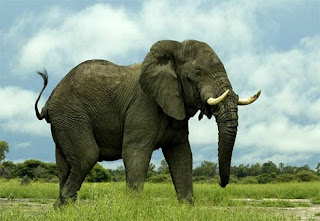
AN elephant in Nyamwaga Ward in Tarime District, Mara Region has injured a resident who fought it off with a knife in a fierce battle.
The tusker attacked Gemsonko Machugu (56) in the wee hours of the morning when he was on his way to the farm. Mr Machugu has been admitted to the hospital after the horrendous spectacle.
He fought with the elephant and freed himself by stabbing the furious beast with a knife, forcing it to leave him alone and move away. Speaking to Journalists at Tarime District Hospital on Friday, Mr Machugu said that he (Machugu) was injured by the elephant on his leg.
“This is the sixth time I have been attacked by elephants in my farm and I always managed to free myself,” he said, adding that at one time he broke an elephant’s leg in his farm.
Mr Machugu said that the latest sad incident occurred last Wednesday at 6 am when he met with a group of elephants. But when he tried to run away, one of them chased and attacked him, but he stabbed the tusker with a knife after it hurt him on one leg.
“It threw me up with it tusks. When I fell to the ground, it stepped on my leg. Then I remembered that I was carrying a knife. I pulled out the knife and stabbed it several times on its leg, and it moved off me and left,” Machugu said.
The Medical Officer of Tarime District, Dr Samson Charles, said that Mr Machugu was seriously injured on his leg, but his condition was improving.
According to an eye-witness, a group of elephants from Serengeti National Park always invaded villages in Tarime District in search of green pastures on the villagers’ farms.
26 July 2010
Climate change 'under-reported'

THE United Nations Education and Scientific Cultural Organization (UNESCO) in Tanzania, in collaboration with the National Environment Management Council (NEMC), Vice President's Office (VPO), and the media is planning to introduce a uniform curriculum on how to address climate change problems.
The Programme Officer for Communication and Information for Tanzania, The Commoros, Madagascar, Mauritius and Seychelles, Mr Al- Amin Yusuph, said this in Mwanza on Sunday at the end of a three-day stakeholders consultation workshop which was held here.
Mr Yusuph said that the workshop was hosted by Saint Augustine University of Tanzania (SAUT) where media stakeholders assessed the curricula of mainstream journalism schools.
They also reviewed the aspect of continuing professional development for in-service journalists in professional teaching and training about environmental matters.
''This initiative of assessing the teaching of environmental and climate change to journalists and other media professionals is part of the United Nations Joint Programme in Environment.
''It is in the eleven Joint Programme which is managed by the United Nations system in
Tanzania, in collaboration with the Government of the United Republic of Tanzania,'' he said.
He said that the UN recognizes the importance of journalists in the initiative.
''Journalists and other media stakeholders are crucial in educating citizens for development, in particular in the area of environment and climate change issues,'' he said.
''The UN also recognizes the importance of environmental conservation for sustainable development. And for that purpose building the capacity of journalists is seen as an important aspect of the UN Joint Programme in environment,'' he added.
Mr Yusuph said the objectives of the proposed workshop are among other initiative that are aimed at assessing the need for enlightening journalists on environment and climate change reporting in mass communication schools.
''This includes the assessment of curriculums,'' he said.
He also mentioned other objectives as collecting of feedback from stakeholders on the strength of environment and climate change reporting in Tanzania.
''Media stakeholders will be able to identify areas of cooperation amongst stakeholders, journalists and communication schools in improving the status of environment teaching and reporting in Tanzania,'' he said.
''A standard curriculum can be used by Journalism schools to create a minimum standard setting instrument,'' he noted adding that the project intends to use 30m/-.
The stakeholders identified areas of improvement in the teaching of environmental journalism.
Some of the challenges identified include, the low depth of the teaching of environmental journalism, the lack of continuing professional development for in-service journalists and the low reporting of environment issues in the media houses.
24 July 2010



The Coastal Forest Ecoregion

The Coastal Forests of Tanzania are a part of the Eastern Africa Coastal Forests Ecoregion according to WWF. This ecoregion extends across six countries from southern Somalia to Mozambique. The ecoregion includes forest patches found on the islands of Unguja, Pemba, and Mafia.
The Coastal forests are characterized by a mosaic of vegetation types including evergreen forest, brachystegia woodland, scrub forest and dry forest. Mangrove forests are not considered to be Coastal Forest in this definition. Coastal Forests are distinct from the forests of the Eastern Arc in terms of climate, elevation, and dominant plant species.
In Tanzania, there are 66 coastal forest patches covering an area of 700 sq. km. While the highest levels of biodiversity are found in the closed canopy forest, this only makes up about 1% of the total area of the Coastal Forest Mosaic. Notwithstanding the small area covered by these forests, they retain high numbers of endemic plant and animal species: 554 plant, five bird, three mammal , 24 reptile, five amphibian, 86 mollusc and 75 butterfly.
17 July 2010
MOUNTAIN ECOSYSTEMS IN TANZANIA

A REVIEW OF MANAGEMENT CHALLENGES AND PROSPECTS
Ruzika N. Muheto, Fadhila H. Khatibu and James. O. Ngana (Editors)
Tanzania has many mountain ranges and hills apart from Kilimanjaro, which provide several ecological and social services that are key to the sustainability of livelihoods of the majority of Tanzania’s population, either directly or indirectly. Examples include the Eastern Arc Mountain ranges that are sources of water for abounding wildlife downstream, agriculture and domestic use to more than half of the population of Tanzania. Apart from water, other mountain services include forest production (timber and non-timber) that in turn provides carbon sequestration services as well as harbouring rich biodiversity and medicinal plants.
Realising the importance of these mountain ecosystems, and in line with the implementation of the Environmental Management Act No. 20 of 2004, the National Environment Management Council commissioned a study on rapid assessment of selected mountain ecosystems with the following objectives: i) to establish an overall picture of their status, ii) to identify the core ecosystem services provided to the surrounding communities, iii) to identify possible pressures that cause destruction, iv) to document available intervention measures, and v) to propose measures to achieve sustainable utilisation of these resources. Among other things, the study serves to remind the current generation that future generations also deserve to benefit from the services of these ecosystems.
The study involved assessment of five mountain ecosystems: Nguru (representing the Eastern Arc Mountains), Rungwe (representing the Southern Highlands and related mountain ranges), Kasulu (representing the Albertine Rift Mountains in the west), Chenene (representing the central part of the country) and Monduli (representing the northern volcanic mountains). The assessment process involved literature review, collection of information from the respective Districts, interviews with District officials and field visits. For each mountain ecosystem, focus group interviews and meetings were held with communities from three villages that directly depend on the services from that particular ecosystem. Other participatory assessment tools (transect walks and field observations) were also used.
Key findings are summarised in the following categories: ecosystem status and trends, ecosystem services, key drivers of change, threats, intervention measures undertaken and their constraints.
The general status and trend show that in all mountain ecosystems, ecological and other services provided by these mountain ecosystems are under heavy pressure as they are continuosly being degraded through various human activities. Environmental degradation in turn, seems to be influencing the local rainfall pattern where longer dry seasons are now being experienced in areas such as Nguru and in the northern volcanic mountain system. In some cases environmental degradation has caused changes in vegetation types, where those found in warmer climates are currently replacing those found in cooler climates.
The survey has shown that there are common ecosystem services in all the assessed mountains which include water resources, biodiversity values (flora and fauna), forest products and medicinal plants. The extent of local community dependence on these resources is also dependent on the circumstances of the particular ecosystem.
However, there are special types of ecological services that are obtained only in certain mountain ecosystems. For example, Nguru and Rungwe mountain ranges harbour a number of endemic plant and mammalian species and destruction of such ecosystems may lead to complete loss of such species, while communities and certain bird species around Chenene hills depend on specific grass species known as Ihung’o and Ng’ana as sources of food during drought. Equally important are the different medicinal plants obtained from different ecosystems.
It has been observed that there are both direct as well as indirect drivers of change. The direct drivers are those associated with land use e.g. shifting cultivation, shortage of land, livestock grazing, bush fires, illegal logging, charcoal making and climate change. Indirect drivers of change include population increase resulting in resource use conflicts, poor village planning, poor conservation measures e.g. around refugee camps, and market forces for forest products.
The main threats facing mountain ecosystems include poor land use practices, bush fires, encroachment into the forest reserves especially those with catchment values, livestock population grazing in limited area and consequently leading to uncontrolled, damaging grazing practices, illegal poaching and discriminate harvesting of forest products such as timber, charcoal and poles.
Poor planning also brings about negative impacts to the ecosystems. For example, planting of the exotic species Pinus patula, as observed in the Rungwe Mountains, threatens the existence of the indigenous forest species. Weak enforcement of existing laws and by-laws was also found to contribute to the failure of invested conservation efforts.
Lack of clear demarcations of forest reserves in the mountain ecosystems was also seen as a threat contributing negatively to the survival of these ecosystems. Inadequate participation by the surrounding communities in different conservation efforts, possibly due to lack of awareness, is yet another problem.
It has also been noted that a number of effective actions have been undertaken towards the management of the mountain ecosystems, including:
1 Involvement of village environmental committees, especially those that are active in the implementation of the environmental by-laws.
2 Gazetting certain critical mountain ecosystems as forest reserves and national parks, e.g. Chenene Hills Forests, Udzungwa and Kilimanjaro Mountain Forests and the Kitulo Plateau natural vegetation.
3 Promoting awareness campaigns through Government and Civil Society Organisations.
4 Practising participatory Forest Management as demonstrated in some of the Eastern Arc Mountains.
Observed constraints inhibiting effective implementation measures include inadequate allocation of financial and human resources to the District Councils, weak capacity by the Village Environmental Committees to enforce by-laws, little awareness and education on environmental conservation, some weakness in policy focus on how conservation activities are done e.g. some NGOs operate in the refugee camps without taking any due notice of the surrounding local communities.
Mountain ecosystems are sources of livelihoods of human population and the biodiversity on earth. In order to sustain these ecosystems the various interventions that have been taken should be upheld and the following actions revitalised:
1. Education and awareness should be enhanced at all levels particularly in communities and institutions living within the ecosystems;
2. Human, financial and technological capacity building should be enhanced in order to match current and future management requirements;
3. Research including inventories and ecosystem boundary demarcation should be undertaken, thus updating the missing scientific information on mountain ecosystems;
4. Alternative income generating activities should be sought for livelihoods in order to reduce pressure on these ecosystems;
5. Alternative sources of energy should be sought to offset the heavy pressure on energy demand from both rural and urban dwellers;
6. Enforcement of existing laws should be revitalised through promotion of good governance;
7. Participation of stakeholders should be revitalised through empowerment and facilitation, particularly the local environmental committees and grassroots institutions; and
8. Best practices, such as sustainable land use management (SLUM) should be supported and promoted in all ecosystems for sustainable livelihoods.
11 July 2010
NILE BASIN NATIONS TO HOLD EXTRAORDINARY SESSION ON ENTEBE DEAL
Upstream countries strongly argue that Egypt and Sudan have kept an unfair water sharing advantage over other Nile source countries including Ethiopia which contributes over 80 per cent of the total waters to the basin.
Last month, four upstream states signed a cooperative framework deal, a move which strongly Egypt and Sudan have remained opposed.
Ethiopia, Uganda, Rwanda and Tanzania signed the agreement. Kenya appended a signature a few days later to become the fifth signatory. Burundi and the Democratic Republic of Congo are also expected to sign but have not yet done so.
In a meeting in Addis on Sunday, Sudan decided to cease cooperation with Nile Basin Initiative countries and requested them to freeze its membership until the current dispute over the agreement signed by the Nile source countries is resolved, the Chinese news agency Xinhua has reported.
"Sudan has affirmed that signing of the framework agreement by five countries is violating the basic principles upon which the Nile Basin Initiative was established," Sudanese minister of irrigation Kamal Ali Mohamed,, who was in Addis Ababa, told Xinhua by telephone.
"Sudan sees that continuation in activities of the Nile basin, after five countries have unilaterally signed a framework agreement, contradicts the basic law and principles for dealing with the Nile Basin countries where it is stipulated that decisions should be taken unanimously," he added.
In the meantime, the Sudanese minister said that the meeting of the Nile Basin countries' irrigation ministers, being held in Addis Ababa, has unanimously agreed on a proposal by Sudan, with the support of Egypt, to hold an extraordinary meeting for all the Nile basin ministers.
Ethiopia, Uganda, Tanzania, Rwanda and Kenya on Sunday reiterated that they would not backtrack from the framework agreement which they signed on May 2010 on the Nile water sharing in the absence of Sudan and Egypt.
NBI is a partnership of the Nile Basin Countries which includes Burundi, DRC, Egypt, Ethiopia, Kenya, Rwanda, Sudan, Tanzania and Uganda. Eritrea enters as an observer nation. The partnership was established to achieve sustainable socio-economic development through equitable utilisation of and the benefits from the common Nile Basin water resources.
NBI provides a unique forum for these countries to move forward a cooperative process to realise tangible benefits in the Basin and build a solid foundation of trust and confidence.
Speaking at the opening of the meeting in Addis Ababa on Sunday, Ethiopia Water Resources minister Asfaw Dingamo, said NBI member countries should further strengthen efforts to maintain the long-term vision of the Initiative.
“We need to demonstrate to the world now, as we have done before, that despite our disagreements we are capable of working together, maintaining the long-term vision. We have to demonstrate to the world that we are still focused on addressing our long-term concerns: eradicating poverty and hunger from our region, jointly and effectively responding to climate change, reversing environmental degradation, turning our region into a zone of peace, tranquility and economic growth and development,” the minister said.
“Let us give chance to reason, justice and fairness to provide us the foundation for building an enduring partnership and cooperation of riparians along the 7,000km of our Great Nile,” he added.
Speaking on his part, Teshome Toga, Ethiopian Parliament Speaker, said Nile cannot be a reason for disunity, rather it should be an opportunity to deepening cooperation and integration among Nile Basin countries.
The Speaker said the Nile riparian countries have no alternative other than cooperating among themselves.
He said geography, history and culture underscore the bond between the peoples of the region.
Egypt which is the current Chair of the Nile Council of Ministers, will hand over the chairmanship to Ethiopia effective this month, while DR Congo currently holding the position of Executive Director of the NBI Secretariat will hand it over to Egypt in September this year. It is a tradition within NBI to rotate the two positions among member states in alphabetical order whereas the position of Executive Director rotates every two years.
"The signed (agreement) can't be unsigned," Ethiopian minister for water resources Asfaw Dingamo, told reporters. "But we hope to reach a consensus and I hope it will be very soon."
The five signatories have given the other Nile Basin countries -- Egypt, Sudan, Burundi and the Democratic Republic of the Congo -- one year to join the pact.
Stretching more than 6,600km (4,100 miles) from Lake Victoria to the Mediterranean, the Nile is a vital water and energy source for the nine countries through which it flows.
Sudanese water minister Kamal Ali Mohamed said his country would now stop cooperating with the NBI because the agreement raised legal issues.
The statement drew immediate fire from Asfaw who said the Sudanese had not revealed their intention to freeze cooperation during the two-day meeting.
For his part, Egypt's Water Resources and Irrigation minister Mohamed Nasreddin Allam, told Reuters that a meeting to discuss the Nile agreement would be held in Nairobi between September and November. He did not give a precise date.
The official Egyptian news agency MENA said the meeting would be held but did not give more details. It said the other states had said they "understood Egypt and Sudan's position ... and based on this an exceptional ministerial ... will be held to decide how to move forward in a matter that serves all Nile Basin states."
Egypt, almost totally dependent on the Nile and already threatened by climate change, is closely watching hydroelectric dam construction in East Africa.
"Ask the Egyptians to leave their culture and go and live in the desert because (you) need to take this water to add it to other countries? No," Allam said.
Under the original pact Egypt, which faces possible water shortages by 2017, is entitled to 55.5 billion cubic metres a year, the lion's share of the Nile's total flow of around 84 billion cubic metres.
Some 85 percent of the Nile's waters originate from Ethiopia and the Lake Basin is estimated to harbour more than half of Kenya's surface water resources.
Upstream countries say they are "tired of first getting permission from Egypt before using river Nile water for any development project like irrigation", as required by a treaty signed during the colonial era between Egypt and Britain in 1929.The new agreement, once effective, is designed to replace the Nile Basin Initiative.
It should be noted that an agreement signed in 1929 between Egypt and Great Britain, which represented its African colonies along the river, gave Egypt veto power over upstream projects.
Another agreement signed in 1959 between Egypt and Sudan allowed Egypt alone to use 55.5 billion cubic meters (87 per cent of the Nile’s flow) and Sudan 18.5 cubic metres each year.
Ethiopia, the biggest water contributor to the Nile basin, and the rest of the riparian countries has been left out.
According to Report from the Ministry of Water Resources, Ethiopia, with an area of 1.08 million square kilometers, has twelve river basins with a mean annual flow of roughly 120.22 billion cubic meters of water.
Although the country is known as the water tower of Africa, the availability of water and the water resources potential in the eastern and western parts of the country is markedly different.
27 June 2010
GOVERNMENT TO BUILD HIGHWAY THROUGH SENSITIVE SERENGETI
The decision ends a three-year-green activists’ protest against the proposed 480km Arusha-Musoma tarmac road, saying it will interfere with the annual migration of some 1.8 million wildlife through the heart of Serengeti.
Isidor Shirima Arusha Regional Commissioner told the The Guardian on Sunday that President Jakaya Kikwete had to intervene by highlighting socio-economic significance of the proposed road for the Tanzania National Parks Authority (TANAPA) to buy the idea.
However, the new highway will cut through the Serengeti across which big herds of wildlife march by the tens of thousands annually. Meanwhile, a traditional elephant migration route would also be divided by it.
It could not be established immediately what made TANAPA accept the routing they fought against for three years or if political instructions came down on them like the proverbial tonne of bricks. But the unusual silence of regular sources within and close to TANAPA speaks volume for itself.
“This issue is no longer in our corridors. The ball is now in the court of TANROADS,” TANAPA Public Relations Manager, Pascal Shelutete said in telephone, hang-up.
Serengeti National Park, which shares the ecosystem with the Maasai Mara Game Reserve in Kenya, has been described as sensitive nature conserved site in Africa and needed an international concern.
Regional Manager for Tanzania Roads Agency (TANROADS) Deusdedit Kakoko has said the cost of the project is $480-million, out of which $260-million would cover the Arusha-Serengeti section and $220-million for Serengeti-Musoma.
According to Kakoko, the real work would begin early 2012, after a feasibility study is completed at the end of this year.
“In January, 2011 TANROADS will mobilise resources for the project as well as floating tenders for consultants, and the real works should be underway by early 2012” Kakoko explained.
The freeway which is projected to be one of the busiest highways in the northern zone will stretch from Mto-wa-Mbu junction on Arusha - Ngorongoro road to Engaruka-Engaresero area, Lake Natron shores, Loliondo, Serengeti’s Kleins Corner en-route to Musoma town.
Proponents of the road reportedly considered the impact of the main highway leading through Mikumi National Park in Tanzania, where a tarmac road runs through the park towards Mbeya, but the sanctuary is limited to smaller numbers of animals crossing the road.
In 2006, USA Today and ABC-TV's Good Morning America, a multi-disciplined panel named the Serengeti sanctuary covering 14,763 sq. km, Site of "The Great Migration" as the Seventh New Wonder of the World.
The annual Great Migration of over 1.8 million wildebeest and 200,000 zebras is one of the most fascinating aspects of life on the Serengeti.
The animals spend most of their time in the Serengeti, 8-9 months a year, because of the availability of ample food resources, attracting most tourists.
Author Bruce Feiler (Walking in the Bible), one of the panelists who selected the Seven New Wonders, notes in USA Today that "the Serengeti is not only a natural wonder that takes your breath away, but it symbolizes years of human endeavor to conserve the natural world."
12 June 2010
Tanzania finalising marine oil spill contingency plan
“Coastal environment is under pressure from inhabitants and visitors to the coast, maritime transportation activities in ports and shipping lanes...that’s why we speeding up the plan to protect marine resources,” said Infrastructure Development permanent secretary Omar Chambo at the opening of a workshop on the National Environmentally Sensitive Areas and the National Oil Spill Contingency Plan and the Environmental Policy on the use of dispersants.
The meeting was organized on Wednesday by the Surface and Marine Transport Regulatory Authority (Sumatra) with the objective of protecting coastal and marine areas from pollution, including oil spills and other related hazards.
The meeting was part of a regional project implemented by nine Western India Ocean countries - Tanzania, Kenya, Madagascar, Mauritius, Comoros, Sychelles and Reunion, South Africa and Mozambique - which are working together in making their coastal and marine areas safer for marine transport.
The PS described the national oil spill contingency plan, which is in the pipeline, as important tool for responding to oil spill and other marine pollution.
“An important component of the contingency plan is an environmental oil spill sensitivity ranking. This is key tool to the pollution response team in the mitigation of an oil spill or other marine pollution incident,” he said.
In this regard, he added, preparation of an environmental oil spill sensitivity ranking of the coastal areas of Tanzania could be useful in the finalization and implementation of the national marine oil spill contingency plan.
Describing the magnitude of the problem, he said, it is estimated that at any given time there are 50 ships in the major shipping lanes off the coast of Tanzania. Approximately nine oil tankers with capacities ranging from 50,000-250,000 tonnes sail through the shipping lanes daily.
“This coastal tanker traffic mostly passes 250 nautical miles offshore...pollution risks exist from vessel collisions and groundings both in the shipping lanes and port areas,” he said.
However, co-ordinator of the Western India Ocean Maritime Highway Development and Coastal and Marine Contamination Prevention Project (WIOMHP) Raj Prayg said that experts had already been deployed to assist Tanzania in drawing up marine resources protection plan.
The national oil spill contingency plan, according to the co-ordinator, seeks to make highly sensitive marine and coastal resources as a matter of priority. “That’s why we need to prepare an Atlas showing these environmentally sensitive areas. They need to be rated in terms of importance so that we may decide judiciously what to protect for it is practically impossible to protect everything,” he said.
According to the experts, Tanzania's oil spill contingency plan will be finalized at the end of this year and its implementation is expected to start in 2011.
05 June 2010
Nile water rights and rainwater harvesting
[Another ‘Sheikh’ predicted that the next’d be Oil Wars resulting from too little, too expensive oil supplies… But, that’s another story…]
One part of Planet Earth where a Water WW is likely to break out in the foreseeable future is Africa as it relates to River Nile.
But, there’s a preventive to that, which people seem to shun… And the few who raise it have their voices drowned in the sabre-rattling. It’s a fairly simple ‘solution’ and, as one sage once said, it’s the simple solutions that’re routinely trampled underfoot in the mad rush to play the melodramatic.
But, I jump the gun here…
The story today’s about the waters of the River Nile which flow from Lake Victoria and finally into the Mediterranean Sea 4,037 miles (6,600km) away. The Nile’s the world’s longest river, rich in History in ways more than one. It’s today at the centre of controversy that threatens to lead to confrontation of Biblical proportions.
This is as seen in the context of two camps whose interests in the River in terms of Water Rights is becoming more and more divergent and urgent. This is amid the looming global water shortage.
One camp comprises Egypt and The Sudan to the North. Both have been the largest consumers of the Nile Waters from time immemorial. They still are – and plan to so remain well into the future.
The other camp comprises seven upstream countries and one in the peripheral. These are Uganda, Rwanda, Burundi, Kenya, Ethiopia, Eritrea, Tanzania and, of course, the Democratic Republic of Congo.
[It’s technically erroneous to say Lake Victoria is the ‘source’ of the Nile. Water from catchment areas beyond the lake flows into it – and then flows therefrom via the Nile. But, that’s another story…].
Perhaps with the exception of the DRC, the other countries can be said to have two things in common: they all are situate in the 3-million square-kilometre Nile Basin. That’s about 10% of the continent’s total area.
The other common thread running through them’s they are in ‘Black Africa,’ while the other two downstream are ‘MENA’ (Middle East & North Africa) countries with large Arab populations.
But, no matter…
About 160m souls out of the around 300m combined population have a direct stake in the waters, heavily depending on them for their livelihood. While the population – and, therefore, demand for the Nile waters – is steadily rising, the supply is steadily dwindling!
Estimates have it that the ‘Nile’ population will top the 600m mark 25 years hence. This is alongside expanding industrial and agricultural activities.
At the other end of the spectrum, the equation is unbalanced by the fact that Nile water flows (as measured at the Aswan) have fallen from 110bn cubic metres between 1870 and 1899 to 81.5bn cm during 1954 to 1988.
However, by dint of some (British) colonial quirk in 1929 – and tugenbund-type (brotherhood in times of doubt and insecurity) pact entered into by Egypt and the Sudan in 1954 – the two countries have ‘rights’ to about 94% of the Nile waters, leaving a paltry 6% for the other 7-8 nations upstream!
The crux of the problem today’s that hard-headed Egypt – dragging meek Sudan along by the scruff of its metaphorical neck – seeks to perpetuate the lopsided rights to Eternity, by hook and by crook.
The arrogance of it all’s that Egypt says the upstream countries weren’t even on the world map as distinct entities when the disputed water rights were drawn up. In true Hitlerite fashion, the Egyptians don’t rule out war to ensure their will dominates absolutely!
Nine of the ten riparian states established the Nile Basin Initiative (NBI) in 1999 as “a joint programme to develop the river in a co-operative manner,” and justly share its economic benefits.
In due course of time and events, seven upstream countries sought to sign a new accord that’d redistribute the water rights judiciously. But Egypt and Sudan refuse to go along with that, dodging – like the Artful Dodger it is fast becoming – the signing of the relative Cooperative Framework Agreement.
I’ve a simple proposal. If Egypt and the Sudan want to perpetuate the extant water rights, they should undertake to finance two projects which’d ensure sustainable water availability for upstream states.
One: finance durable rainwater harvesting projects for those countries... And, two: finance a project to permanently clear the sudd that obstructs water flow in the White Nile, causing considerable water loss through evaporation.
If the two have been asked of this and pooh-poohed it, then they have no higher moral ground from which to insist on depriving their colleagues upstream their God-given right to duly enjoy the fruits of Mother Nature and Father Time!
23 May 2010


16 May 2010
Dar sinks in global tourism ranking
It is ranked 98th overall, up from 88th position in the previous report year. Tanzania is ranked 3rd worldwide for its natural environment, with several World Heritage natural sites, rich fauna, and so much protected land area as to place the country 5th on that indicator.
The report published by the World Economic Forum, states that national policy on environment is not sufficiently supportive of the development of the sector, and is measurably less so than last year.
Other issues of concern, according to the report are security levels in the country, and a focus must be placed on improving the health of the workforce, upgrading the educational system, and improving all types of infrastructure on which the industry is dependent.
“This is buttressed by an important focus in the country on environmental sustainability, particularly as it pertains to the development of this industry. There is also a general affinity of the population to Travel & Tourism, and it is clearly seen to be an overall national priority” reads the report.
Kenya, a country long famous for its tourism attributes, is ranked 18th regionally and 97th overall, up four places since last year. Kenya is ranked 25th for its natural resources, with two World Heritage natural sites and its rich diversity of fauna.
Tourism is a strong priority within the country (ranked 12th on this pillar), with high government spending on the sector, effective destination- marketing campaigns, and country presence at several international fairs and exhibitions.
In addition, there is a strong focus on environmental sustainability in the country, which is particularly important for Kenya given the sector’s dependence on the natural environment. On the downside, the policy environment is not at present conducive to the development of the sector, with bilateral Air Service Agreements that are not open, insufficiently protected property rights, and much time and cost required for starting a business.
In addition, infrastructure remains underdeveloped and health hygiene levels require improvement. Just like in Tanzania, the security situation in the country remains a significant hindrance to further developing the sector.
General analysis of the year 2009, as stated in the report, may go down in history as the year of “make or break” for the Airline and the Travel & Tourism (T&T) sector as a whole. The historically high price of crude oil of $147 per barrel in the summer of 2008 clearly highlighted the vulnerability of the sector to mid and long-term oil prices.
An oil price of $100 per barrel was considered ruinous only a few years ago before it emerged as a realistic scenario to which all players in the T&T sector have to adapt in the recent past.
At such a high level, the price of oil will become even more critical to almost every part of the tourism value chain. Although weak global demand, caused by global economic recession, resulted in a steep oil price decline to $45 per barrel by the fourth quarter of 2008, this will not change the mid- to long-term oil forecast.
Several economic analysts predict an end to the recession in the next one to two years. The International Energy Agency (IEA) estimates that oil prices will recover to more than $100 per barrel as soon as the economies around the world recover from recession.
According to that agency, strong growth in the emerging economies of China and India, along with the maturing of several oil fields, will soon rally the oil price again.
The obvious impact of a high oil price is an increase in the operating costs of airlines. Fuel costs were only an average 18 percent of airlines’ operating costs between 2000 and 2007, according to IATA estimates.
With prices of more than $100 per barrel, as seen during 2008, fuel accounts for more than a third of the total operating cost for an average airline, thus representing the single most important cost item in expenditures.
Low-cost carriers are even more exposed to fuel prices than their higher-cost counterparts, as kerosene expenditures represent more than 50 percent of their total cost base.
Tanzania's tourism earnings, the country's foremost foreign exchange earner, dropped to $1.26 billion in 2009 from $1.28 billion in the previous year, partly due to the global crisis, the central bank said on Monday.
"The dismal performance is partly attributed to the global financial crisis, which has affected major sources of tourists to Tanzania," the central bank said in a monthly report.
"However, improvement in travel receipts is anticipated given the recovery of major economies from (the crisis) and concerted efforts by the government and other stakeholders in promoting Tanzania as a unique tourist destination in new emerging markets."
Lions of Tsavo
Nine months after his arrival he killed the first one. From nose to the tip of its tail that lion measured 9 feet 8 inches (3 metres) and stood 3 feet 9 inches high. Three weeks later Patterson killed the companion. The lions’ skins were turned into carpets for his flat in England. By 1924 he was broke and he sold the carpets to the Chicago Field Museum of Natural History in the USA. The lions’ skins and heads were mounted on wire forms and until now are displayed in the Museum’s mammal collection.
Nowadays, through stable isotope analysis it is possible to reconstruct the diets of animals by analyzing their teeth, hair, and bones. (Isotopes are atoms of the same element but with different masses because they have different numbers of neutrons.) Isotopes exist in various foods in different ratios, creating a sort of “signature”. Different plants have different signatures. These ratios are passed up the food chain. Therefore the tissues of the body reflect the chemicals in the food and water that are ingested. So for example if a buffalo eats grass, and a lion eats that buffalo, the isotopes from the grass become part of the lions’ tissues. It is possible to analyze what animals were eating, even after they are dead!
To discover what the lions of Tsavo were actually eating, researchers Domini and Yeakel decided to analyze the isotope signatures of a few hairs about 3 centimeters long and a plug of bone from the skulls. The hairs would reveal what the lions had eaten in the previous 3 months; the bones would reveal what they had eaten over their life times. For comparison the researchers also obtained skin and muscle tissue from 5 modern Tsavo lions, bone samples from 25 Tsavo herbivores which would have been the lions normal diet, and bone samples from ancestral skulls of the Taita people, the native people of the area.
Results showed that the Taita people had been eating corn, mbaazi, and the blood and milk of goats. This gave the people a specific isotope signature.
Results also showed that one lion had shifted from a lions’ traditional diet of grass-grazing animals such as zebras and wildebeests, towards leaf eating browsers such as gazelles at the end of its life. The other lion seems to have been eating browsers for most of its life until it shifted its diet to people. During their final three month, humans comprised approximately 30% of one lion’s diet, compared to just 13% of the other lion’s.
The scientists speculate that the lions were companions. They attacked the camp together – but one was after human beings, and the other was focusing on the goats and donkeys.
Why did they change their diets so drastically? It is believed that a sequence of events turned the lions into man-eaters. First, ivory hunters had killed off most of the region’s elephants. Elephants stimulate the growth of grassy savannahs, because they push over trees to eat their leaves. When elephants die, animals that eat grass do poorly – and that is what lions typically hunt. Second, drought and disease had further reduced the population of potential prey. Third, into this situation came a large population of railroad workers. Fourth, one of the lions was in ill health due to broken teeth and major infections on its jaw that probably led to its dependency on soft human prey.
Especially interesting is that the lions were cooperating while eating different prey. It is now understood that individuals of a species can appear identical but actually have different eating habits. Although lions typically hunt together and share the proceeds, cooperation is not just simply related to food sharing. There are other benefits. Territoriality would be one. And perhaps they simply enjoyed being together even though they were eating different things.